🌿 The Regulation of Organic Products in Spain: Complete Guide
In recent years, organic products have become a symbol of quality, sustainability, and respect for the environment. An increasing number of consumers in Spain and Europe seek foods and agricultural products that are not only healthy but also meet strict criteria for natural production. But what standards ensure that these products are truly organic? Who monitors that these rules are followed? In this article, I explain how the control of organic products works in Spain and why it is so important for producers and consumers. 👉 In our Allotarra store all products are organic: Buy
-
- What is organic and what is not?
- How is it controlled and certified?
- Who supervises and sanctions?
- What must appear on the labels?
- How is import and trade controlled?
🌍 From the EU to Spain: a harmonized regulatory system
The foundation of the entire organic production and control system lies in the European regulation. Since January 1, 2022, organic production in the European Union is mainly regulated by the Regulation (EU) 2018/848 of the European Parliament and of the Council, which replaced the previous Regulation (EC) No 834/2007. This regulation is not just a text about agriculture: it is the legal framework that defines what an organic product is, how it is produced, how it is labeled, and how it is controlled. It has several objectives:
- Guarantee the integrity of organic products.
- Achieve full consumer confidence.
- Avoid fraud or incorrect use of terms like «organic» or «biological».
- Harmonize rules across the EU to protect competition and enable trade between member countries.
📌 What does the regulation understand by «organic product»?
An organic product is one that has been produced following environmentally respectful agricultural practices and strict criteria regarding inputs, cultivation techniques, animal feeding, etc. Some basic rules are:
- Prohibition of genetically modified organisms (GMOs) and synthetic fertilizers or pesticides.
- Promotion of practices that enhance biodiversity, soil health, and animal welfare.
Furthermore, the labeling must include protected terms such as «ecological,» «bio,» or «organic,» and, in the case of packaged foods, comply with specific requirements (more below I will tell you about this).
🛠️ The control system: the cornerstone of trust
The most fundamental aspect of this framework is the official control system. It is not enough for a producer to say that their product is ecological: they must prove it. And this is where controls, certifications, and periodic audits come into play.
🧾 1. Registration and control obligation
Before placing a product on the market as ecological — or even in the «conversion» phase — the operator (farmer, processor, or importer) must notify their activity to the competent authorities and be part of the control regime established by the regulation. In Spain, this function is mainly carried out by the Autonomous Communities, which act as the competent authority and organize control within their territory.
👁️ 2. Regular inspections
Once registered, the operator enters a control system that includes:
- Periodic on-site inspections at the farm or facilities.
- Document review of all processes: from sowing to marketing.
- Sampling, when necessary, to verify that no unauthorized substances are present.
- Assessment of agricultural practices, animal feeding, input use, and product traceability.
Only after passing these controls is a certificate issued that authorizes the operator to use ecological terms and the EU logo on their product.
📜 3. Control throughout the entire food chain
Controls are not only applied to the field. They also cover:
- Processors and transformers, who must ensure that their practices do not contaminate organic products during processing.
- Importers, who must demonstrate that imported products have been produced under equivalent standards.
- Transporters and distributors, who must ensure traceability and prevent mixing with non-organic products.
This comprehensive approach ensures that the product reaching the consumer has traveled a controlled and verifiable path.
🏷️ Labeling and logo use: transparency for the consumer
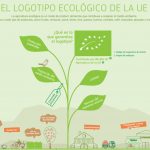
One of the most visible requirements for the consumer is labeling. Not every food can carry the term «ecological» or the European logo (the famous leaf of stars). To do so, the product must be certified and controlled. In Spain, in addition to the EU logo, the label must indicate:
- The code of the control authority or entity that certifies the product.
- The designation of the country or region of production («EU Agriculture,» «Spain Agriculture,» etc.).
- The exclusive use of authorized terms — «bio» or «organic» cannot be used generically without complying with the regulations.
This allows the consumer to clearly identify a certified organic product, which increases transparency and trust in the market.
💢 The Role of Autonomous Communities
Although the regulation is European, in Spain each Autonomous Community implements and enforces control within its territorial scope. This means that:
- Communities organize their own registers of organic operators.
- They can designate official or authorized control entities to carry out inspections and certifications.
- They manage the official control program within their territory.
For example, producers in the Community of Madrid register with the agency responsible for organic agriculture and obtain a certificate with a specific code, which then appears on the labels of the organic products produced there.
🌱 Import and International Trade
European regulation also governs the import of organic products from countries outside the EU. For these products to be marketed as organic within Spain and the EU:
- They must come from countries or control systems equivalent.
- They must be inspected and certified by recognized organizations.
- They must comply with the same legal definition of organic product as European products.
This point has been subject to debate, as some sectors of the Spanish agricultural sector fear that certain imports do not meet strict controls similar to those of the EU, which could affect consumer confidence and market competition.
❌ What happens if regulations are violated
The control system is not symbolic: sanctions are in place if an operator attempts to sell products labeled as organic without complying with regulations. This can involve:
- Revocation of the certificate.
- Prohibition of using organic terms and logos.
- Financial penalties.
- Possible administrative sanctions depending on each Autonomous Community.
The robust control system aims precisely to prevent the market from being flooded with falsely labeled products, which harms both consumers and legitimate producers.
🧠 Conclusion: a strict and beneficial control
The control standards for organic products in Spain are not an optional addition; they are the heart of the organic production system. Thanks to the European legal framework — especially Regulation (EU) 2018/848— and its coordinated implementation by the Autonomous Communities, consumers can trust that foods and products certified as organic meet clear, demanding, and officially verified rules. This system guarantees: And, above all, protects consumer confidence in a market that continues to grow strongly in Spain.